The large-scale Lifelines population study is inviting new participants for the first time in twenty years. The study is seeking around 16,000 relatives of existing participants. This expansion has been made possible by a grant from the National Programma Groningen (NPG).
Bron: RTV Noord
‘Twenty years ago, we started with 167,000 residents from the northern Netherlands, who form the basis of Lifelines,’ says Managing Director Baukje Boertien. ‘And now the big news is that, for the first time in twenty years, we are going to accept new participants.’
Lifelines is one of the largest population-based studies and biobanks in Europe. A biobank is a repository for biological samples, such as blood and urine, which are used for research. Since its launch in 2006, Lifelines has been monitoring around ten per cent of the population in the three northern provinces.
The aim is to gain an understanding of healthy ageing: why is it that one person grows old in good health, whilst another develops chronic illness? Participants regularly complete questionnaires about their lifestyle, diet and well-being. Once every five years, they visit a research centre for measurements and blood tests. The anonymised data is used worldwide by researchers, hospitals and companies.
 Who can take part?
Not everyone can simply sign up for the new intake. ‘We’re really looking for a new generation,’ says Boertien. ‘You must be aged 40 or under, live in Groningen, Drenthe or Friesland, and have family members who are already taking part, such as brothers, sisters, children or grandchildren.’ Partners of older participants are often excluded because they are over 40. Existing participants will soon receive a message explaining how they can register family members.
This focus on family members is deliberate: it allows researchers to track hereditary patterns and family ties over a longer period. ‘As we are already following three generations, we hope that with this new cohort we can add a fourth generation,’ says Boertien.
Isabelle Blaes has been taking part since Lifelines began. During a visit to the research centre at the UMCG, she undergoes the familiar measurements, such as having her weight and height taken. ‘I find it incredibly valuable,’ she says. ‘All those tens of thousands of people from Friesland, Groningen and Drenthe who have been monitored for twenty years through questionnaires and measurements. That provides such valuable information about how healthy we are, what causes us to fall ill, and how we can stay healthy.’
She also recognises the importance of family links in the study: ‘Our health is closely linked to our lifestyle – which we learn from our families – and to our genes. That combination of family links and lifestyle in all that data is incredibly valuable.’ When she signed up back then, her own family members wanted to take part too, but the study was already full.
Some of the donated material is sent to the UMCG, where tests are carried out to determine how much sugar a person has consumed, the level of fat in their blood and their blood count. The rest is processed by robots into small tubes and stored in a fully automated storage facility at -80 degrees, which now holds millions of samples. ‘The lab is a really exciting part of Lifelines,’ says team leader Hilde Laeremans.
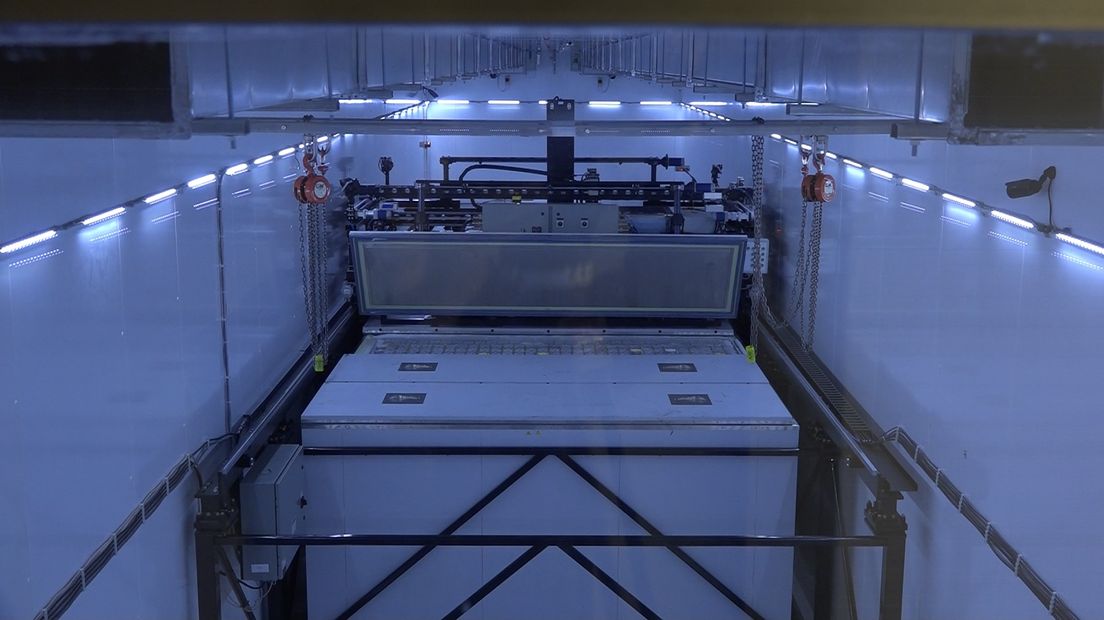 ‘We send all those little tubes to researchers all over the world to find out why people in the North age healthily and others do not,’ says Laeremans.
What makes this material special is that it comes from healthy people. ‘Usually, in the medical world, we only have blood from people who are ill,’ explains Laeremans. ‘You can learn a lot from that, but what we really want to know is what it means to be healthy. Thanks to our healthy volunteers, we know what a healthy body looks like.’
She is therefore looking forward to the new, young participants: ‘We can learn a great deal from them, and we hope to be able to follow them for many years to come.’
Despite all the personal data and biological samples, participants’ privacy remains strictly protected. In the lab, staff work exclusively with barcodes. ‘You give your name to the doctor’s assistant or the phlebotomist, and from that moment on you are a barcode,’ says Laeremans.
‘So we will never know which participant is who. It is completely anonymous.’ Boertien also emphasises that trust: ‘As soon as the data comes in, personal details are immediately separated from the research data. As a participant, I also entrust my own data entirely to Lifelines.’
For new participants, there is also an immediate reward: a free health check-up. But according to Boertien, there is more to it than that. ‘The main motivation is that you are contributing to a unique scientific project through which researchers are discovering why some people age healthily and others do not. Ultimately, the goal is more healthy years for everyone.’