LIFE Cooperative continues to build a leading Life Sciences & Health ecosystem in the Northern Netherlands. The Northern Netherlands has the knowledge, businesses and expertise to make a difference internationally in Life Sciences & Health. LIFE Cooperative, the leading northern partnership for SMEs in life sciences and health, brings these strengths together and is creating the conditions to bring innovations to market and to patients more quickly. “Our aim is for the Northern Netherlands to be one of Europe’s leading Life Sciences & Health ecosystems by 2030. LIFE Cooperative is the unifying force that makes this possible,” explains Ronald Hesse, director of LIFE Cooperative.
The development of new diagnostics and medicines requires more than just scientific breakthroughs. Talent, funding, specialist facilities and strategic collaboration are essential for further developing and scaling up innovations. LIFE Cooperative is working to create these conditions for growth, in partnership with companies, research institutions and public authorities in the Northern Netherlands.
Since its foundation in 2014, the cooperative has grown into a network of around 70 companies, ranging from start-ups and innovative SMEs to international players such as Thermo Fisher and Symeres. To realise its ambition by 2030, the LIFE Cooperative is focusing on four programmes: Network & Events, Innovation, Human Capital and Facilities. These programmes support the growth of five strategic industries in the Northern Netherlands: Enabling Health Tech, Polymers for Health, Diagnostics & Drug Development, Sustainable Pharma and Nuclear Medicine.
Arnoud Huisman, CEO of ProteoGuide and representative for Diagnostics & Drug Development within the LIFE Cooperative, sees this as a significant opportunity for the region:
“Our challenge is not to create more innovation, but to bring the innovation we already have to application and market more quickly. The Northern Netherlands has many of the necessary ingredients: strong research institutions, extensive biobanks, clinical expertise and specialised companies. What is not yet sufficiently organised is the pathway from biomarker and drug discovery to independent validation, clinical application and commercial development.
Through the Biobank Bay initiative, we are exploring how we can structurally strengthen that chain. By better linking existing infrastructure and expertise with joint validation programmes, industrial partners and investment capacity, we can, for example, further develop promising biomarkers into diagnostic applications and new business opportunities.
The LIFE Cooperative can play a key connecting role in this, alongside companies, research institutions, healthcare organisations, and public and private partners. The Dutch Life Sciences Conference is an excellent opportunity to discuss this ambition and explore how we can further strengthen collaboration between companies and other regional partners.”
During the Dutch Life Sciences Conference in Leiden on Thursday 26 November, LIFE Cooperative will be hosting the parallel session ‘Partnering & Business Development: Driving Innovation Through Strategic Collaboration’. The session will explore trends in partnering, licensing and alliances. Practical examples will provide insights into deal-making and cross-border collaboration. In this way, the programme aligns with LIFE Cooperative’s ambition to help companies further develop their position and growth potential.
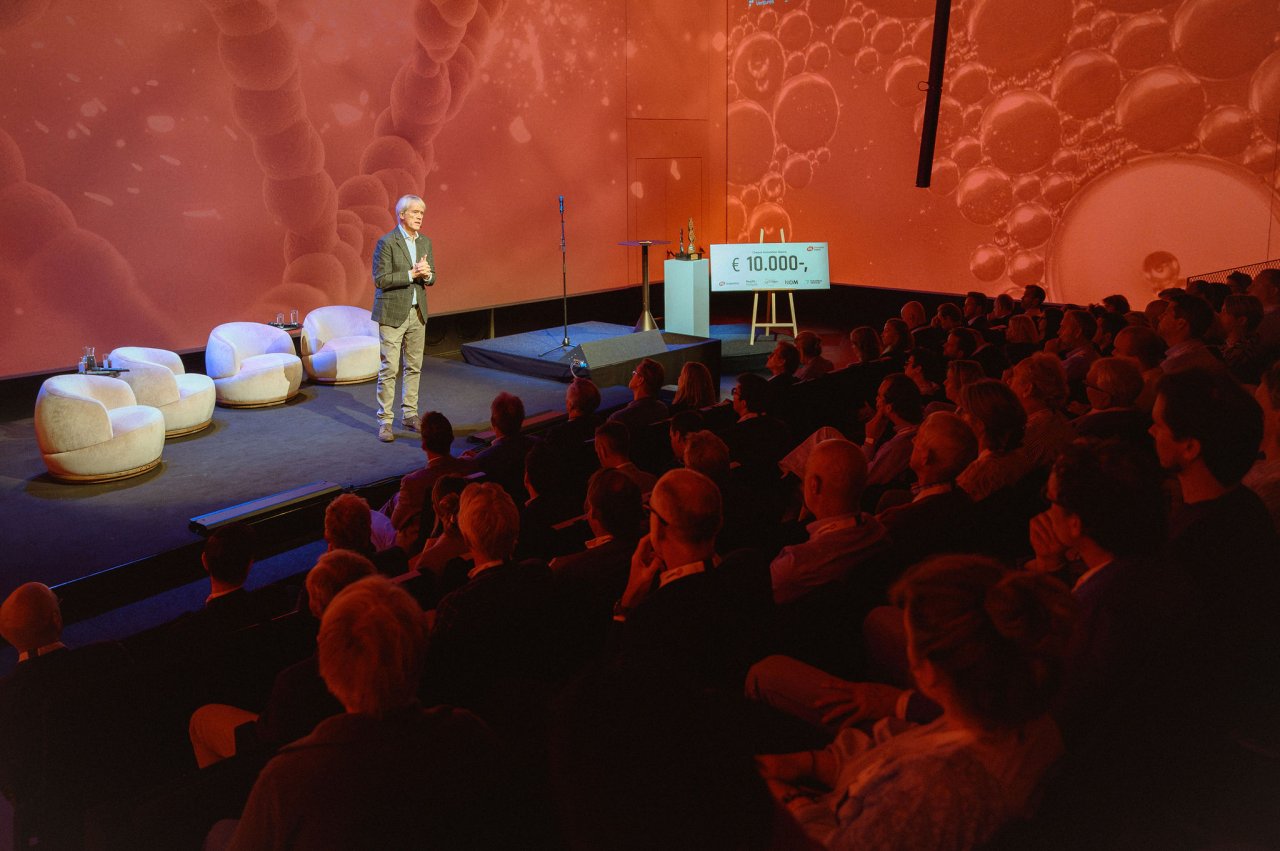
This ambition was also a key theme at the fifth LIFE Science Conference on 22 September at Forum Groningen. Over 200 professionals discussed how the Northern Netherlands can translate its strong position in knowledge and innovation into economic activity, new value chains and economic growth.
In his keynote speech, former ASML CEO Peter Wennink emphasised that the region has everything it needs, but that organisation, setting a common goal and working together are the deciding factors. Hesse: “The picture Wennink painted fits seamlessly with the vision and ambitions of LIFE Cooperative. Our approach shows that collaboration pays off, as our region now has a growing, robust LSH sector. Onwards to 2030!”
The ambition is clear: to work together to build an LSH ecosystem in which companies grow, investment is attracted and innovations reach patients more quickly.