De LIFE Cooperative, the cooperative for the life sciences & health sector in the Northern Netherlands, is taking a new step toward the future with the announcement of its new board composition. As of October 1, the LIFE Cooperative proudly welcomes two new faces: Annelies Wolters, director of Lode Holding, and Koos Koops, partner at Carduso Capital and former co-founder and CEO of Xendo. These new board members bring fresh ideas and energy to elevate the cooperative's ambitions to the next level.
Annelies Wolters: "In the North, we have a fantastic innovative ecosystem, of which Lode Holding has been a part for many years. I am delighted to contribute to the LIFE Cooperative board with my own knowledge and expertise, especially in the field of medical technology."
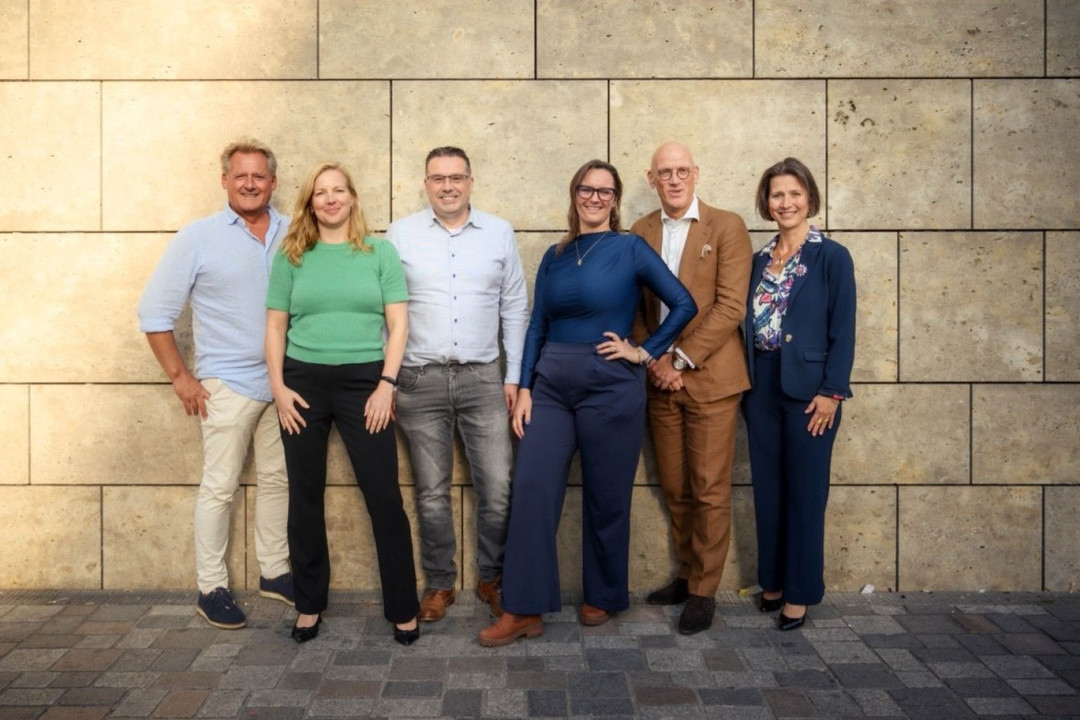
At the same time, the cooperative bids farewell with gratitude to two key figures who played a crucial role in the success of LIFE Cooperative. Ton Vries, Head of Innovation & Technology at Symeres, and Johannes Wolters, CEO of Lode Holding, have decided to pass the baton after ten years of dedicated service. Their impact on the cooperative is undeniable and will continue to be reflected in the activities of the LIFE Cooperative.
In addition to welcoming two seasoned entrepreneurs, the LIFE Cooperative is also adding a familiar face to its leadership. Ronald Hesse will enthusiastically take on the role of director, succeeding Peter Ketelaar, who will join the board as chairman, ensuring his experience and network remain an asset to the LIFE Cooperative.
"I am extremely excited to contribute further to the ambitious goals we aim to achieve together in my new role as director of the LIFE Cooperative. From the very beginning, I have been involved in the cooperative’s launch and development through my role at Campus Groningen, working closely with entrepreneurs. I look forward to continuing this and amplifying the voice of entrepreneurs even more. The close ties with campus locations in the city and region present a unique opportunity for stronger collaboration, fostering innovative connections, and developing practical facilities that propel us all forward," said Ronald Hesse.
With this renewed leadership at the helm, the LIFE Cooperative is fully committed to pursuing new plans and ambitions. The vision? To work together with all members toward a successful future, driven by growth and innovation through collaboration.
A full house, sharp discussions, and an afternoon in which science and industry visibly strengthened one another. The Dutch Medicines Winter Afternoon demonstrated that Groningen is not only a strong geographical spot, but also a substantive force within the Dutch life sciences landscape. The event, organized by FIGON (Federation for Innovative Drug Research Netherlands) in collaboration with LIFE Cooperative, brought professionals from across the Netherlands to the north. Researchers, entrepreneurs, developers, and clinical experts gathered around one shared ambition: to bring innovative medicines to patients faster, smarter, and better.Klaas Poelstra, Chair of FIGON, looks back positively on the event: “It was great to see local businesses in the health sector and leading academic scientists engaging in conversation with one another. They have so much to gain from each other.“From what to how What became particularly clear during the Dutch Medicines Winter Afternoon was how rapidly the field of drug development is evolving, and how essential collaboration has become. At a time when therapies are increasingly targeted, complex, and costly, the focus is shifting from only what we develop to how we do so: more intelligently, more sustainably, and better aligned with patient needs. This broader context was already reflected in the opening remarks by Klaas Poelstra, who emphasized the importance of continued innovation for the Netherlands’ competitive position and patient care. On behalf of the LIFE Cooperative, Robert Hof highlighted that regional collaboration is a decisive factor: by bringing science, entrepreneurship, and clinical practice closer together, real acceleration can be achieved. The first substantive contributions made it clear that innovation today is not only about new molecules, but also about new delivery methods. Rob Steendam demonstrated how long-acting microspheres can improve treatment adherence and reduce patient burden. Jaap Wieling showed how inhalation technology is evolving into a platform for both local and systemic therapies. Through her research on polyelectrolyte coacervates, Marleen Kamperman placed these innovations within a fundamental scientific framework. After the break, the discussion shifted to clinical translation and advanced nanomedicines. Flávia Sousa illustrated how polymer-based nanomedicines contribute to targeted brain delivery. Ad Roffel underscored the importance of robust pharmacokinetic studies in an era where the demands for evidence continue to increase. Erik Frijlink reflected on innovation within both existing and new delivery systems, while Helder Santos outlined the potential of RNA delivery via nanotechnology for cardiac tissue repair.More than a program During the closing networking reception, it became clear what participants had gained from the afternoon. As Robert Hof, Board Member of the LIFE Cooperative, put it: “The FIGON Winter Afternoon was an excellent event with distinguished speakers and strong engagement. We look forward to the next edition and extend our sincere thanks to Klaas Poelstra and FIGON for hosting the event in the Northern Netherlands.” The common thread throughout the afternoon was therefore unmistakable: the future of medicines does not lie within a single discipline, but in the connections between them. In a time of increasing healthcare pressure, rapid technological advancement, and international competition, such collaboration is not a luxury—it is a necessity. The Dutch Medicines Winter Afternoon showed that this collaboration is firmly rooted in the Northern Netherlands and that Groningen is positioning itself emphatically as a breeding ground and accelerator for innovative drug development.
Innovation in medicines takes center stage on Thursday, 26 February during the Dutch Medicines Winter Afternoon, an inspiring event organized by FIGON (Federation for Innovative Drug Research Netherlands) in collaboration with the LIFE Cooperative.
A unique collaboration for an urgent problem Pharmaceutical residues in groundwater and surface water pose a growing problem. Due to population ageing and the rise in chronic conditions, medication use is expected to increase significantly in the coming years. This creates an increasing threat to environmental and human health, particularly in Northern Netherlands as one of the most rapidly ageing regions. What makes this project unique is that parties from the water technology sector, the Life Science & Health sector, and the healthcare sector jointly work with SMEs to develop innovative solutions. Under the leadership of lead partner TCNN, these domains are brought together, resulting in a powerful acceleration of both knowledge development and the actual implementation of innovative solutions.Project objectives Under the guidance of work package leaders Water Alliance, LIFE Cooperative, CEW, and UMCG, the partners focus on elaborating existing problem areas. For each problem area, SMEs will be sought that can provide solutions across four interconnected pillars: • Advanced water treatment: development and application of new technologies to effectively remove pharmaceutical residues from water. • More sustainable medicines and administration: innovation in pharmaceutical products and delivery methods that reduce environmental impact. • Improved prescribing behaviour and medication adherence: awareness-raising and training to prevent unnecessary medication use. • Active knowledge sharing: intensive collaboration, communication, and dissemination of best practices within the region and beyond.Impact after three years During the kick-off, participants emphasised the shared ambitions they aim to achieve: • A structural connection between the water, pharmaceutical, and healthcare sectors• Measurable reduction in medication use through more conscious prescribing• Sustainability as an integral and self-evident part of medication use and policy In addition to these societal benefits, the project aims to create 75 new jobs and to provide targeted support to at least 30 companies. The developed solutions can also be applied nationally and internationally. This integrated approach positions Northern Netherlands as a national and international frontrunner in tackling pharmaceutical residues in water.Partners The project is a collaboration between: TCNN (lead partner), LIFE Cooperative, Wilhelmina Ziekenhuis Assen, Martini Ziekenhuis, Isala Ziekenhuis, University of Groningen, UMCG, Frisius MC, Water Alliance, Centre of Expertise Watertechnology (CEW), Wetterskip Fryslân, Waterschap Noorderzijlvest, Province of Groningen, Province of Drenthe, Province of Fryslân, SNN, and Medicijnresten uit Water Noord-Nederland. Together, we are building a healthy, sustainable, and economically strong Northern Netherlands.