“There is simply no structured education in molecular imaging to support drug development,” says internist-oncologist Derk Jan de Groot of the UMCG. With the new IMED (IMaging EDucation) project, UMCG, together with project partners Hanze and the LIFE Cooperative, aims to change that. The project, recently awarded within PharmaNL’s Human Capital Growth programme and made possible through funding from ZonMw, will develop modular education for professionals in hospitals, pharmacies, and the pharmaceutical industry.
“There is a strong demand for structured education in molecular imaging, both for upskilling and reskilling,” De Groot explains. “Within hospitals, research using radioactive tracers for PET scans and fluorescent tracers for applications such as fluorescence endoscopy has been ongoing for years. However, there has not yet been a modular programme covering this entire spectrum. With IMED, we are filling that gap.”
The project is aimed at post-BSc and post-MSc professionals and is carried out in close collaboration with Hanze University of Applied Sciences in Groningen and a consortium of northern life sciences companies represented by the LIFE Cooperative. “It is important that we do this together with both educational institutions and industry. All three partners are equal in this process,” De Groot emphasizes.
The programme consists of four modules, which can be followed individually or in combination. These modules cover the production of radioactive and fluorescent compounds, conducting studies in preclinical or clinical settings, image analysis using AI, and regulatory aspects. “Many participants will likely take more than one module, but they can also choose those that best match their daily work,” De Groot adds.
Each module combines preparatory materials—such as short video lectures—with two on-site training days at UMCG, Hanze, or participating companies. “It is designed to be accessible: participants complete part of the programme at their own time and location, complemented by short in-person sessions,” says De Groot.
The goal is for the programme to become self-sustaining after the funding period. “We will measure success by the number of participants who continue to enrol in the modules, allowing the programme to sustain itself,” De Groot notes. Interest in the project is already strong. “The LIFE Cooperative has conducted an analysis among its members, and several companies have already expressed interest,” says De Groot. The project officially launched on 31 January and will run for four years.
De Groot describes the PharmaNL funding application process via ZonMw as a positive experience. The preparatory Connection Days (information sessions organised by PharmaNL) proved particularly valuable. “There were sessions, including in Groningen, where everything was clearly explained. That immediately provided insight into the opportunities and the application process. Submitting the proposal afterwards was straightforward and manageable,” he says.
What makes an application successful? According to De Groot, well-structured collaboration is essential. “Bring all stakeholders together at an early stage. Discuss the needs and possibilities of each partner. It takes time, but it makes the process much smoother,” he advises. His experience shows that projects are most successful when educational institutions, companies, and researchers align early and make clear agreements.
With this project, UMCG and its partners make an important contribution to lifelong learning in the pharmaceutical sector, ensuring that knowledge of molecular imaging remains widely accessible in the Northern Netherlands and beyond. By creating a modular, flexible, and practice-oriented education programme, IMED not only enhances professional expertise but also strengthens the pharmaceutical value chain in the Netherlands.

Text: PharmaNL (author Marlies Schipperheijn)
That is the firm belief at LIFE Cooperative. The annual conference, which this time featured Peter Wennink as one of the speakers, recently celebrated its fifth edition. The LIFE Science Innovation Award was presented, and the companies and guests in attendance can look back on an inspiring evening. This reflects the ambition of LIFE Cooperative, which was set up over 10 years ago to connect people and is now continuing to build the conditions necessary for growth.
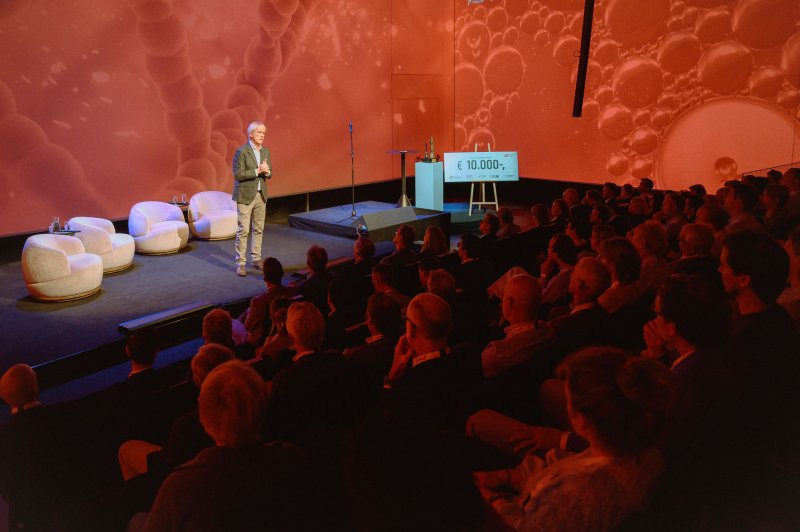
“We do not need to be the best at everything. The question is where we are strong, where we can excel, and how we can ensure that knowledge and innovation actually lead to companies, products and international business.” This message from former ASML CEO Peter Wennink was a key theme of the fifth edition of the LIFE Science Conference, held on Tuesday 22 September at Forum Groningen. With his keynote, Wennink also echoed the findings of his national advisory report The Route to Future Prosperity, in which he calls for strengthening the Netherlands’ capacity to generate economic value.
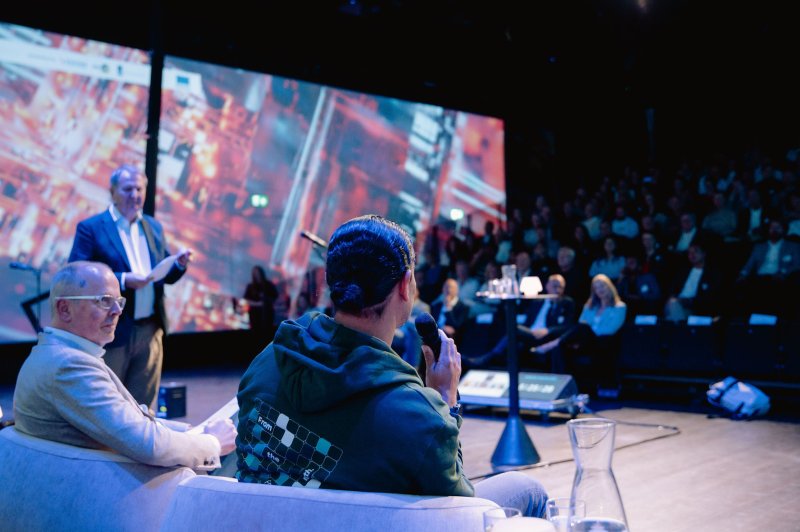
Voor startups in Life Sciences & Health sector is een sterk netwerk minstens zo belangrijk als een goed idee. Toegang tot kapitaal, talent en markten kan het verschil maken tussen een veelbelovende innovatie en een technologie die daadwerkelijk de markt bereikt. Precies daarom sponsort Future Tech Ventures (FTV) dit jaar de LIFE Science Conference op 22 september. Voor het investeringsfonds is de conferentie een belangrijke plek om zichtbaar te zijn binnen het Life Sciences & Health-ecosysteem én om de bedrijven in zijn portefeuille verder te helpen.