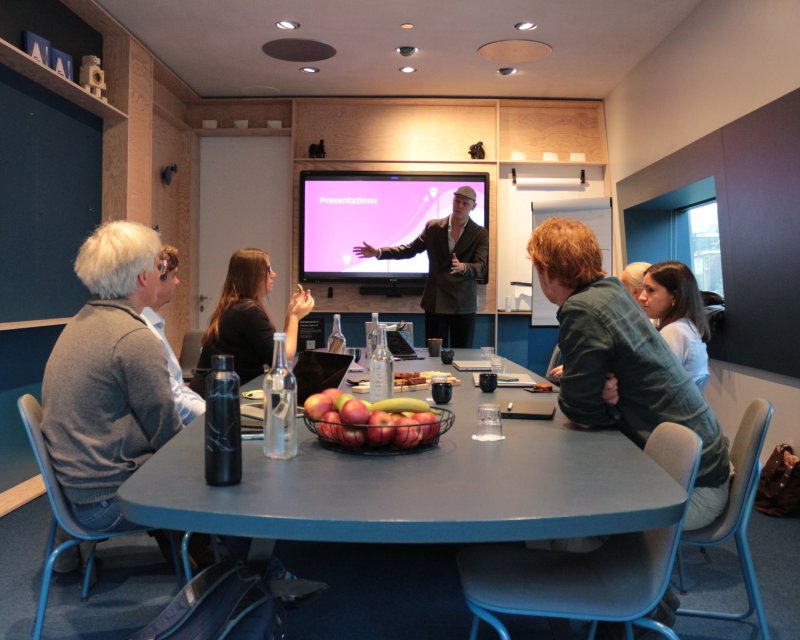
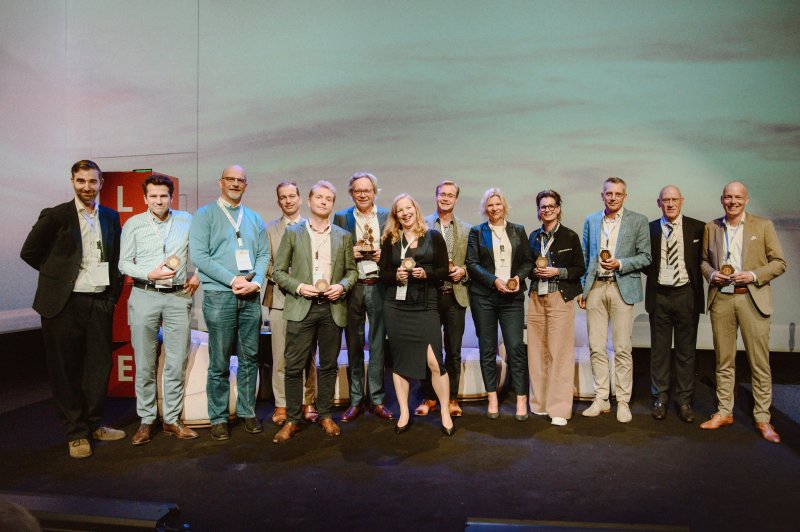
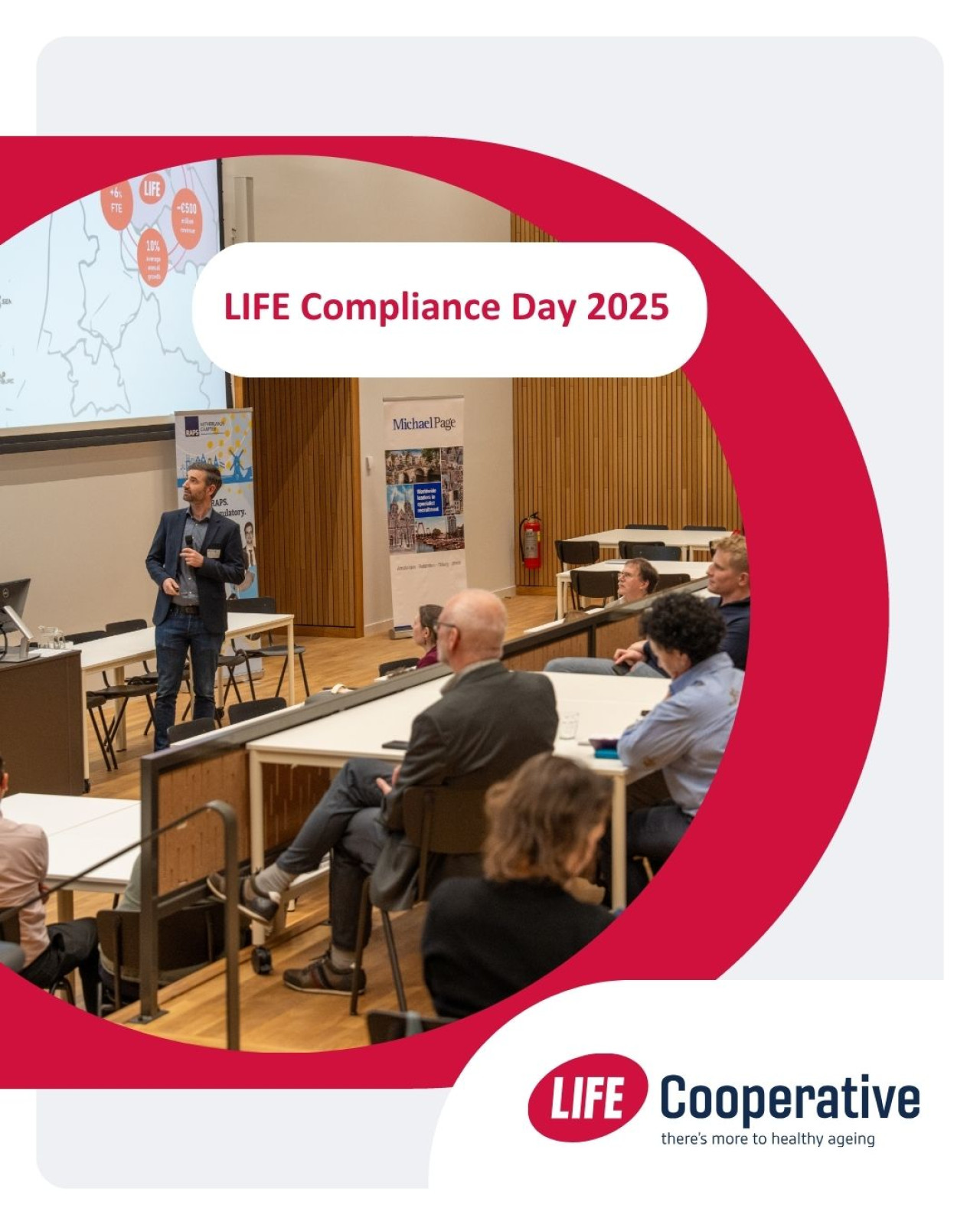
What a great first edition of LIFE Compliance Day last year! Together with our partners, we brought professionals together for a day full of insights, knowledge sharing, and valuable connections around compliance and MDR Article 5.5.
Looking back with pride, and already making plans for the next edition in 2026! Want to read more about the edition last year? Read the full recap of the UMCG Fast Lane Unit here!
LIFE Compliance day 2025 is co-financed by the European Union, Samenwerkingsverband Noord-Nederland (SNN), Michael Page and UMCG Fast Lane Unit.
In the North, and in Groningen in particular, there are dozens of companies working on innovations in the fields of life sciences and health. There are many hidden gems among them, says Ronald Hesse, director of the LIFE Cooperative partnership. “Millions of patients worldwide have already benefited from innovations developed here in Groningen,” he says.
Researchers at the UMCG and their spin-off CC Diagnostics, located on Campus Groningen, have developed a new test that could make cervical cancer screening more efficient and user-friendly.
A full house, sharp discussions, and an afternoon in which science and industry visibly strengthened one another. The Dutch Medicines Winter Afternoon demonstrated that Groningen is not only a strong geographical spot, but also a substantive force within the Dutch life sciences landscape. The event, organized by FIGON (Federation for Innovative Drug Research Netherlands) in collaboration with LIFE Cooperative, brought professionals from across the Netherlands to the north. Researchers, entrepreneurs, developers, and clinical experts gathered around one shared ambition: to bring innovative medicines to patients faster, smarter, and better.Klaas Poelstra, Chair of FIGON, looks back positively on the event: “It was great to see local businesses in the health sector and leading academic scientists engaging in conversation with one another. They have so much to gain from each other.“From what to how What became particularly clear during the Dutch Medicines Winter Afternoon was how rapidly the field of drug development is evolving, and how essential collaboration has become. At a time when therapies are increasingly targeted, complex, and costly, the focus is shifting from only what we develop to how we do so: more intelligently, more sustainably, and better aligned with patient needs. This broader context was already reflected in the opening remarks by Klaas Poelstra, who emphasized the importance of continued innovation for the Netherlands’ competitive position and patient care. On behalf of the LIFE Cooperative, Robert Hof highlighted that regional collaboration is a decisive factor: by bringing science, entrepreneurship, and clinical practice closer together, real acceleration can be achieved. The first substantive contributions made it clear that innovation today is not only about new molecules, but also about new delivery methods. Rob Steendam demonstrated how long-acting microspheres can improve treatment adherence and reduce patient burden. Jaap Wieling showed how inhalation technology is evolving into a platform for both local and systemic therapies. Through her research on polyelectrolyte coacervates, Marleen Kamperman placed these innovations within a fundamental scientific framework. After the break, the discussion shifted to clinical translation and advanced nanomedicines. Flávia Sousa illustrated how polymer-based nanomedicines contribute to targeted brain delivery. Ad Roffel underscored the importance of robust pharmacokinetic studies in an era where the demands for evidence continue to increase. Erik Frijlink reflected on innovation within both existing and new delivery systems, while Helder Santos outlined the potential of RNA delivery via nanotechnology for cardiac tissue repair.More than a program During the closing networking reception, it became clear what participants had gained from the afternoon. As Robert Hof, Board Member of the LIFE Cooperative, put it: “The FIGON Winter Afternoon was an excellent event with distinguished speakers and strong engagement. We look forward to the next edition and extend our sincere thanks to Klaas Poelstra and FIGON for hosting the event in the Northern Netherlands.” The common thread throughout the afternoon was therefore unmistakable: the future of medicines does not lie within a single discipline, but in the connections between them. In a time of increasing healthcare pressure, rapid technological advancement, and international competition, such collaboration is not a luxury—it is a necessity. The Dutch Medicines Winter Afternoon showed that this collaboration is firmly rooted in the Northern Netherlands and that Groningen is positioning itself emphatically as a breeding ground and accelerator for innovative drug development.