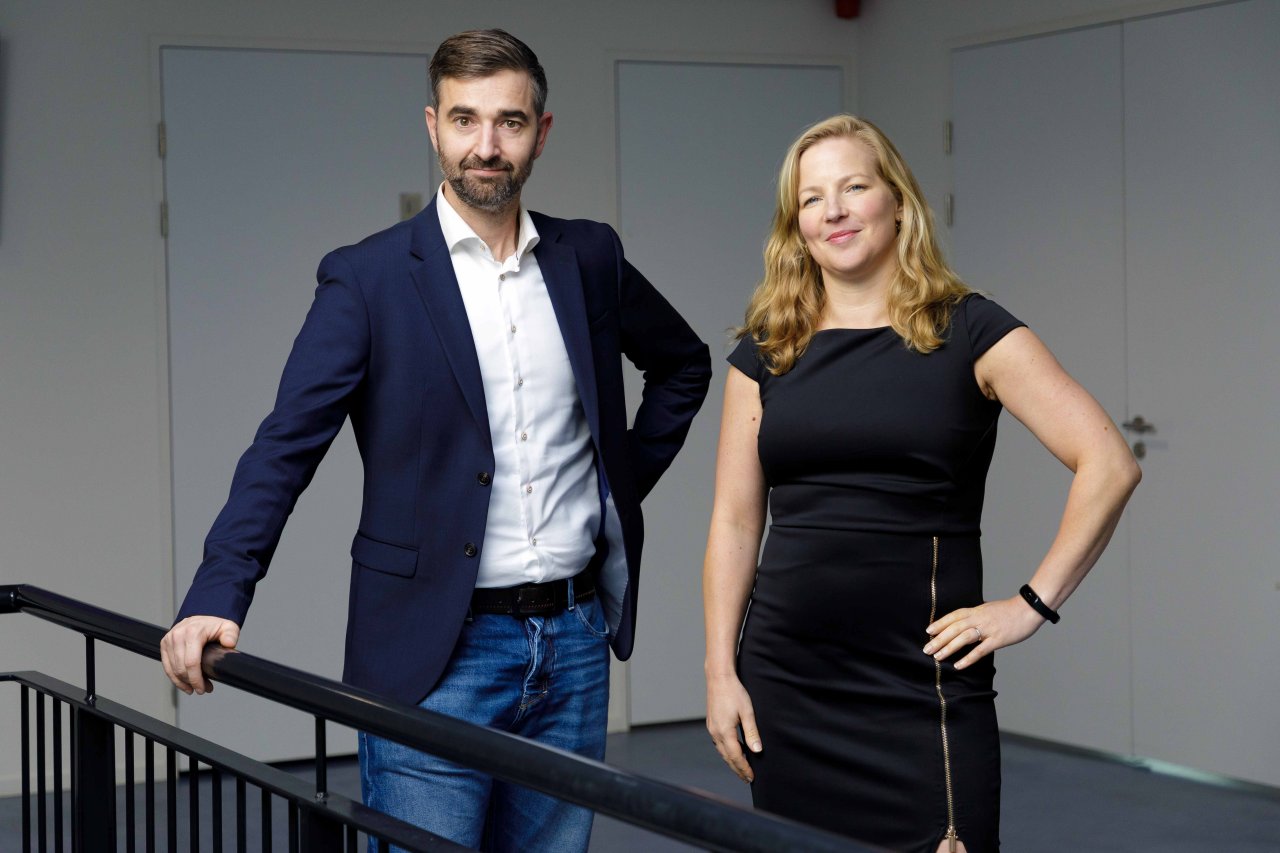
Director Ronald Hessen and Annelies Wolter were interviewed in the latest edition of NoordZ. Read the full article below.
That is the firm belief at LIFE Cooperative. The annual conference, which this time featured Peter Wennink as one of the speakers, recently celebrated its fifth edition. The LIFE Science Innovation Award was presented, and the companies and guests in attendance can look back on an inspiring evening. This reflects the ambition of LIFE Cooperative, which was set up over 10 years ago to connect people and is now continuing to build the conditions necessary for growth.
This means the yoke of humility has been cast aside. “We have ambition and have now formed an ecosystem within which businesses, knowledge institutions and public authorities are actively working on the enabling conditions that will allow the life sciences sector in this region to realise its growth potential,” explains director Ronald Hesse. “The aim is, and remains, to bring together entrepreneurs, research institutions, public authorities, start-ups and scale-ups, so that they can develop projects and innovate more quickly, and effectively attract funding and talent.”
LIFE Cooperative was founded in 2014 by a number of entrepreneurs active in the life sciences and health sector, with the aim of organising, innovating and developing projects together. More than 65 companies have now joined the cooperative, employing thousands of people and having worked well together in recent years. Through joint projects, for example, more than 50 million in investment has been attracted, creating over 500 high-quality new jobs. Furthermore, a number of participants within LIFE Cooperative have grown to become global players. “Not doing everything ourselves, but bringing parties together and organising collectively what is difficult to achieve individually – that is what LIFE Cooperative aims to focus on.” And it is going well; it is not without reason that LIFE Cooperative is regarded as one of the most important innovation clusters in the northern Netherlands.
The focus is on five strategic themes in which the Northern Netherlands Life Sciences & Health industry holds a distinctive position and can further build on this: Polymers for Health, Enabling Health Tech, Diagnostics & Drug Development, Sustainable Pharma Production and Nuclear Medicine. Ronald: “We’ve had to work hard for ten years to make these collaborations possible; that foundation is rock-solid. Now we want to – and are able to – increase our impact. What does the world need, and what contribution can the companies within the LIFE Cooperative make towards that? Many solutions are needed, and companies in the Northern Netherlands can play a key role in this.”
One example is the companies active in Enabling Health Tech. “A dynamic, innovative group of more than 25 companies,” says LIFE Cooperative board member Annelies Wolters. “These companies develop products that contribute to the well-being of patients at all stages of life. Although the region has a strong knowledge base, the infrastructure for commercial upscaling and further industrialisation is still lacking. By investing broadly across the value chain now – and specifically in shared testing and production facilities – we are convinced that the region can develop into a European hotspot.”
Annelies: “One company alone cannot retain talent in Groningen, but 70 companies can. The same applies to facilities and impact. The Northern Netherlands is a strong region in the field of Life Sciences & Health. We have the technology and innovations, the talent, the knowledge, the capacity to invest; there is space, energy and the opportunity to launch pilot projects; we have patient populations and opportunities for upscaling. In short, everything is in place to make this an industrial success.”
“Wennink has advised the Government on how we should build a new economy,” Ronald continues. “In doing so, we often look to ASML, Philips or VDL – companies every Dutch person knows. However, the north of the Netherlands now also has a few real gems, so the potential is there. There is fertile ground for a new economy in the northern Netherlands, and the Life Sciences & Health sector is a perfect example of this. We want to play in the Champions League, and all the conditions to do so are in place here.”
Annelies: “The past ten years have shown that collaboration works, that companies are growing and want to stay here because the potential is huge. We’re brimming with confidence and are now seizing the opportunity to raise the bar even higher together.”
“Together with our partners, the UMCG, the University of Groningen and the AI Factory, we are making huge strides in digital health,” concludes Ronald. “A great deal of data has been collected in the north in recent years, which enables us to predict health trends and how diseases develop. The companies affiliated with LIFE Cooperative can therefore become a game-changer in the healthcare landscape. We are convinced of that.” “Where will we be in ten years’ time? By then, we will have taken the step towards further industrialisation; LIFE Cooperative will have 120 members, providing employment for 10,000 staff. And we will have grown into one of Europe’s leading Life Sciences & Health ecosystems, with LIFE Cooperative acting as the unifying force.”
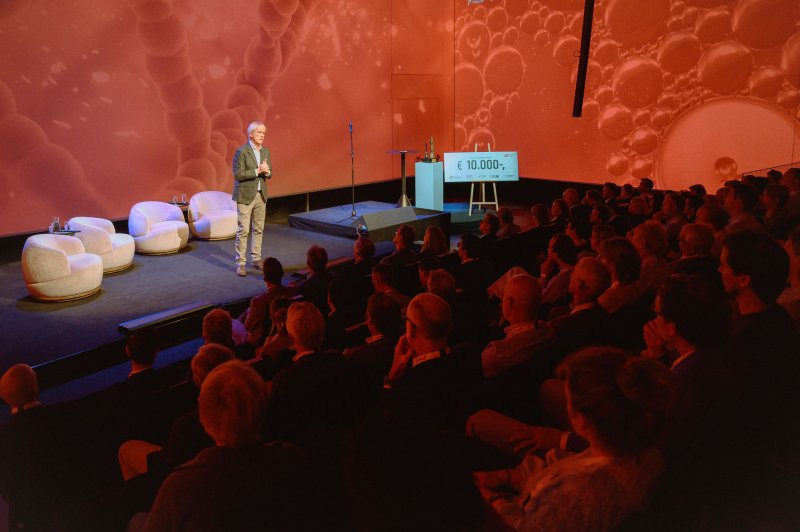
“We do not need to be the best at everything. The question is where we are strong, where we can excel, and how we can ensure that knowledge and innovation actually lead to companies, products and international business.” This message from former ASML CEO Peter Wennink was a key theme of the fifth edition of the LIFE Science Conference, held on Tuesday 22 September at Forum Groningen. With his keynote, Wennink also echoed the findings of his national advisory report The Route to Future Prosperity, in which he calls for strengthening the Netherlands’ capacity to generate economic value.
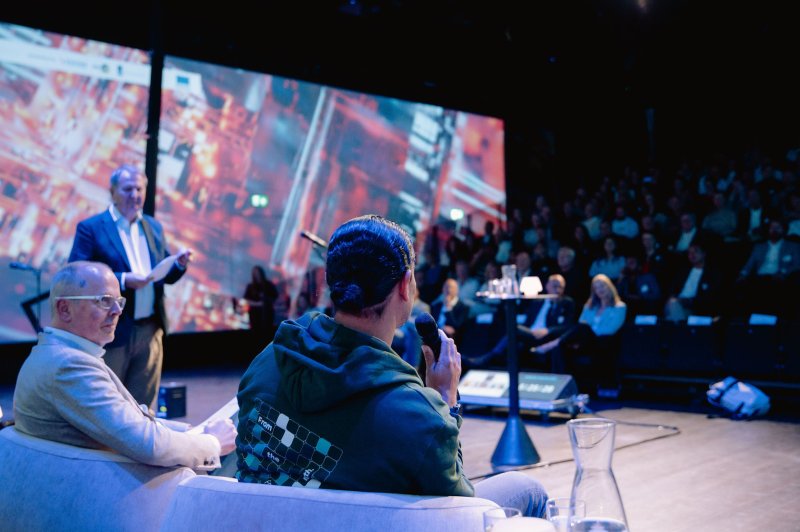
Voor startups in Life Sciences & Health sector is een sterk netwerk minstens zo belangrijk als een goed idee. Toegang tot kapitaal, talent en markten kan het verschil maken tussen een veelbelovende innovatie en een technologie die daadwerkelijk de markt bereikt. Precies daarom sponsort Future Tech Ventures (FTV) dit jaar de LIFE Science Conference op 22 september. Voor het investeringsfonds is de conferentie een belangrijke plek om zichtbaar te zijn binnen het Life Sciences & Health-ecosysteem én om de bedrijven in zijn portefeuille verder te helpen.
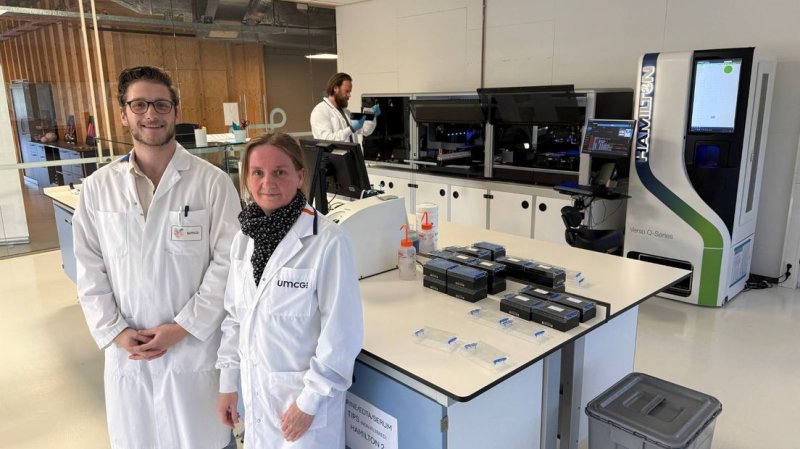
The large-scale Lifelines population study is inviting new participants for the first time in twenty years. The study is seeking around 16,000 relatives of existing participants. This expansion has been made possible by a grant from the National Programma Groningen (NPG).