Officiële toekenning van €78,8 miljoen voor PharmaNL vanuit het Nationaal Groeifonds! Vandaag is door het Nationaal Groeifonds bekend gemaakt dat PharmaNL aan de voorwaarden voldoet om de voorwaardelijke toekenning van €78,8 miljoen om te zetten naar een definitieve toekenning. “Vanuit PharmaNL zijn we zeer blij met dit bericht. Samen met stakeholders kunnen we nu aan de slag om invulling te geven aan de ambities van PharmaNL”, aldus Brigitte Drees, directeur Pivot Park.
Bekijk hier het officiële bericht vanuit de Rijksoverheid.
PharmaNL is een landelijk publiek-privaat consortium bestaande uit Leiden University Medical Center, Universiteit Leiden, Campus Groningen, Pivot Park en in nauwe samenwerking met FAST - Platform to Future Affordable Sustainable Therapies.
PharmaNL gaat van start met tachtig miljoen subsidie vanuit het Nationaal Groeifonds om te investeren in onderzoeksfaciliteiten en menselijk kapitaal.
Bron: PharmaNL
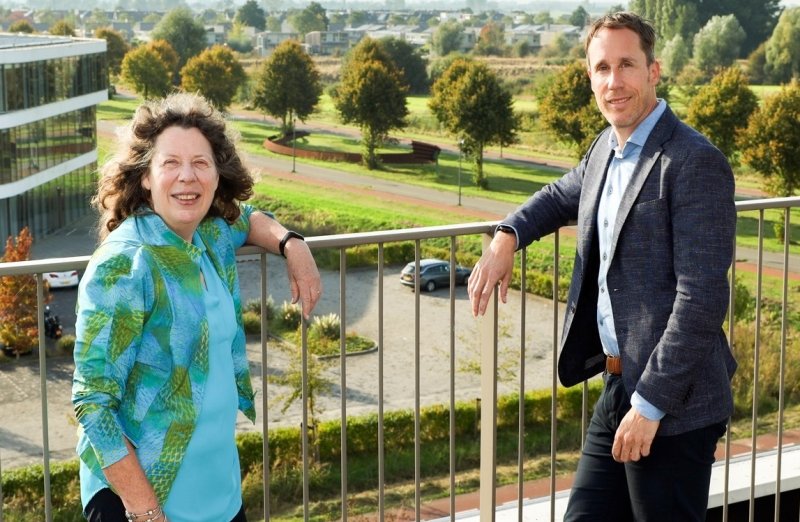
A full house, sharp discussions, and an afternoon in which science and industry visibly strengthened one another. The Dutch Medicines Winter Afternoon demonstrated that Groningen is not only a strong geographical spot, but also a substantive force within the Dutch life sciences landscape. The event, organized by FIGON (Federation for Innovative Drug Research Netherlands) in collaboration with LIFE Cooperative, brought professionals from across the Netherlands to the north. Researchers, entrepreneurs, developers, and clinical experts gathered around one shared ambition: to bring innovative medicines to patients faster, smarter, and better.Klaas Poelstra, Chair of FIGON, looks back positively on the event: “It was great to see local businesses in the health sector and leading academic scientists engaging in conversation with one another. They have so much to gain from each other.“From what to how What became particularly clear during the Dutch Medicines Winter Afternoon was how rapidly the field of drug development is evolving, and how essential collaboration has become. At a time when therapies are increasingly targeted, complex, and costly, the focus is shifting from only what we develop to how we do so: more intelligently, more sustainably, and better aligned with patient needs. This broader context was already reflected in the opening remarks by Klaas Poelstra, who emphasized the importance of continued innovation for the Netherlands’ competitive position and patient care. On behalf of the LIFE Cooperative, Robert Hof highlighted that regional collaboration is a decisive factor: by bringing science, entrepreneurship, and clinical practice closer together, real acceleration can be achieved. The first substantive contributions made it clear that innovation today is not only about new molecules, but also about new delivery methods. Rob Steendam demonstrated how long-acting microspheres can improve treatment adherence and reduce patient burden. Jaap Wieling showed how inhalation technology is evolving into a platform for both local and systemic therapies. Through her research on polyelectrolyte coacervates, Marleen Kamperman placed these innovations within a fundamental scientific framework. After the break, the discussion shifted to clinical translation and advanced nanomedicines. Flávia Sousa illustrated how polymer-based nanomedicines contribute to targeted brain delivery. Ad Roffel underscored the importance of robust pharmacokinetic studies in an era where the demands for evidence continue to increase. Erik Frijlink reflected on innovation within both existing and new delivery systems, while Helder Santos outlined the potential of RNA delivery via nanotechnology for cardiac tissue repair.More Than a Program During the closing networking reception, it became clear what participants had gained from the afternoon. As Robert Hof, Board Member of the LIFE Cooperative, put it: “The FIGON Winter Afternoon was an excellent event with distinguished speakers and strong engagement. We look forward to the next edition and extend our sincere thanks to Klaas Poelstra and FIGON for hosting the event in the Northern Netherlands.” The common thread throughout the afternoon was therefore unmistakable: the future of medicines does not lie within a single discipline, but in the connections between them. In a time of increasing healthcare pressure, rapid technological advancement, and international competition, such collaboration is not a luxury, it is a necessity. The Dutch Medicines Winter Afternoon showed that this collaboration is firmly rooted in the Northern Netherlands and that Groningen is positioning itself emphatically as a breeding ground and accelerator for innovative drug development.
Innovatie in geneesmiddelen staat centraal op donderdag 26 februari tijdens de Dutch Medicine Winter Afternoon, een inspirerende middag georganiseerd door FIGON (Federation for Innovative Drug Research Netherlands) in samenwerking met de LIFE Cooperative. “We zijn ontzettend trots op de sterke line-up tijdens dit event, waarbij toonaangevende experts vanuit wetenschap en industrie samenkomen en de grenzen van medicijnontwikkeling verkennen.
Een unieke samenwerking voor een urgent probleem Medicijnresten in grond- en oppervlaktewater vormen een groeiend probleem. Door vergrijzing van de bevolking en toename van chronische aandoeningen stijgt het medicatiegebruik de komende jaren flink. Dit vormt een groeiende bedreiging voor de gezondheid van de leefomgeving en mens, vooral in Noord-Nederland als één van de meest vergrijsde regio's. Wat dit project uniek maakt, is dat partijen vanuit de watertechnologiesector, Life Science & Health sector en zorgsector gezamenlijk met het mkb op zoek gaan naar innovatieve oplossingen. Onder leiding van penvoerder TCNN worden deze domeinen samengebracht met als eindresultaat een krachtige versnelling in zowel kennisontwikkeling als daadwerkelijke toepassing van innovatieve oplossingenDoelen van het project De partners richten zich, onder leiding van werkpakketleiders Water Alliance, LIFE Cooperative, CEW en UMCG, op de uitwerking van bestaande probleemgebieden. Per probleemgebied zal er gezocht worden naar mkb-bedrijven die oplossingen kunnen bieden op vier samenhangende pijlers: • Geavanceerde waterzuivering: ontwikkeling en toepassing van nieuwe technologieën om medicijnresten effectief uit water te verwijderen. • Duurzamere medicijnen en toediening: innovatie in farmaceutische producten en toedieningsvormen die minder milieubelastend zijn. • Verbetering van voorschrijfgedrag en therapietrouw medicijngebruik: bewustwording en scholing om onnodig medicijngebruik te voorkomen. • Actieve kennisdeling: intensieve samenwerking, communicatie en verspreiding van best practises binnen de regio en daarbuitenImpact na drie jaar Tijdens de kick-off benadrukten deelnemers de ambities die zij gezamenlijk nastreven: • Een structurele verbinding tussen water-, farma- en zorgsector • Meetbare vermindering van medicijngebruik door bewuster voorschrijven • Duurzaamheid als vanzelfsprekend onderdeel van medicatiegebruik en -beleid Naast deze maatschappelijke voordelen wordt er gestreefd naar het ontstaan van 75 nieuwe arbeidsplaatsen en ten minste 30 bedrijven die gericht worden ondersteund. De ontwikkelde oplossingen kunnen bovendien (inter)nationaal worden toegepast. Deze integrale aanpak maakt Noord-Nederland een landelijke en internationale koploper in de strijd tegen medicijnresten in water.Partners Het project is een samenwerking tussen: TCNN (penvoerder), LIFE Cooperative, Wilhelmina Ziekenhuis Assen, Martini Ziekenhuis, Isala Ziekenhuis, Rijksuniversiteit Groningen, UMCG, Frisius MC, Water Alliance, Centre of Expertise Watertechnology (CEW), Wetterskip Fryslân, Waterschap Noorderzijlvest, Provincie Groningen, Provincie Drenthe, Provincie Fryslân, SNN en Medicijnresten uit Water Noord-Nederland. Samen bouwen we aan een gezond, duurzaam én economisch sterk Noord-Nederland.